
 Image 1 of 5
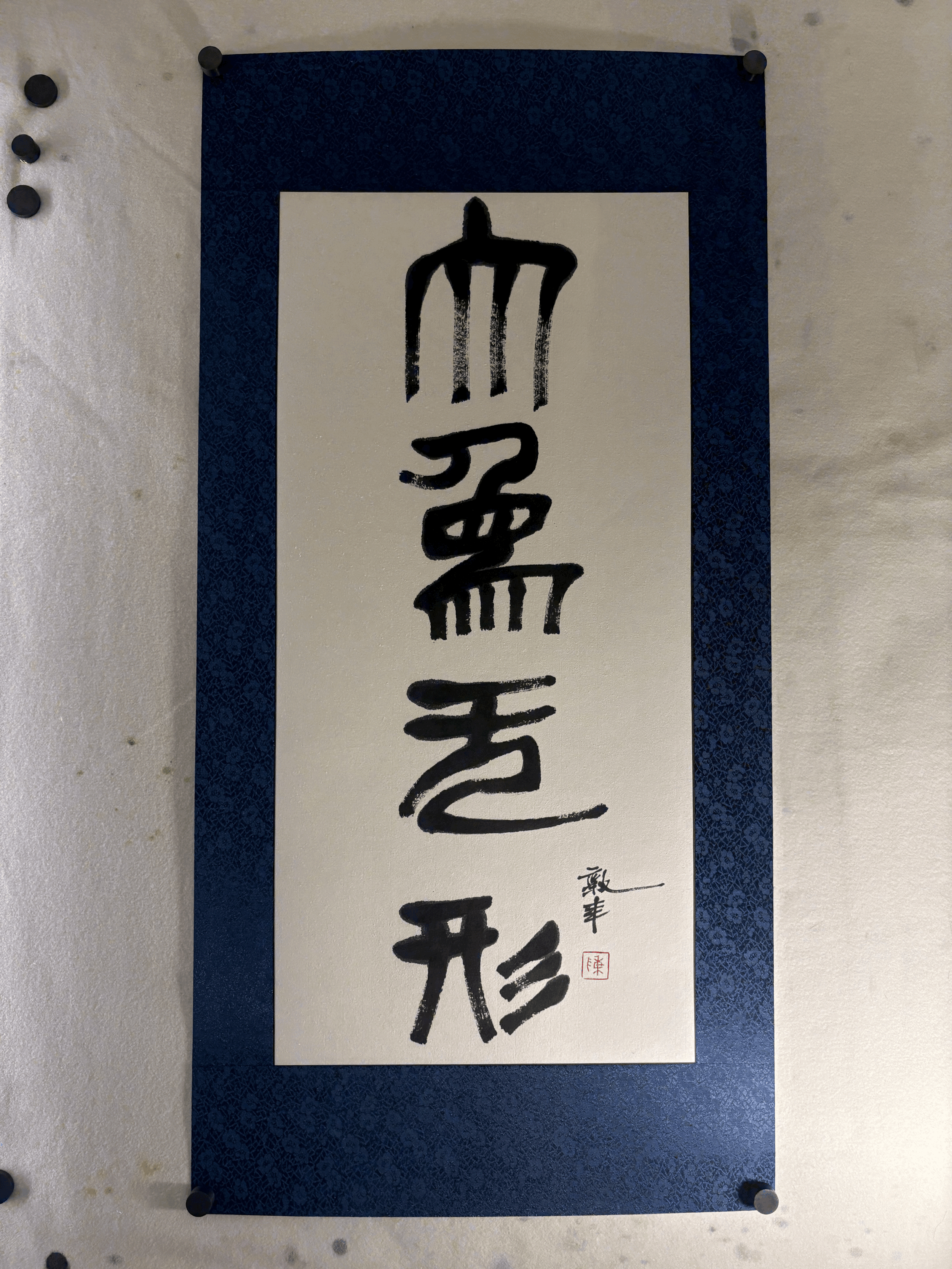 Image 2 of 5
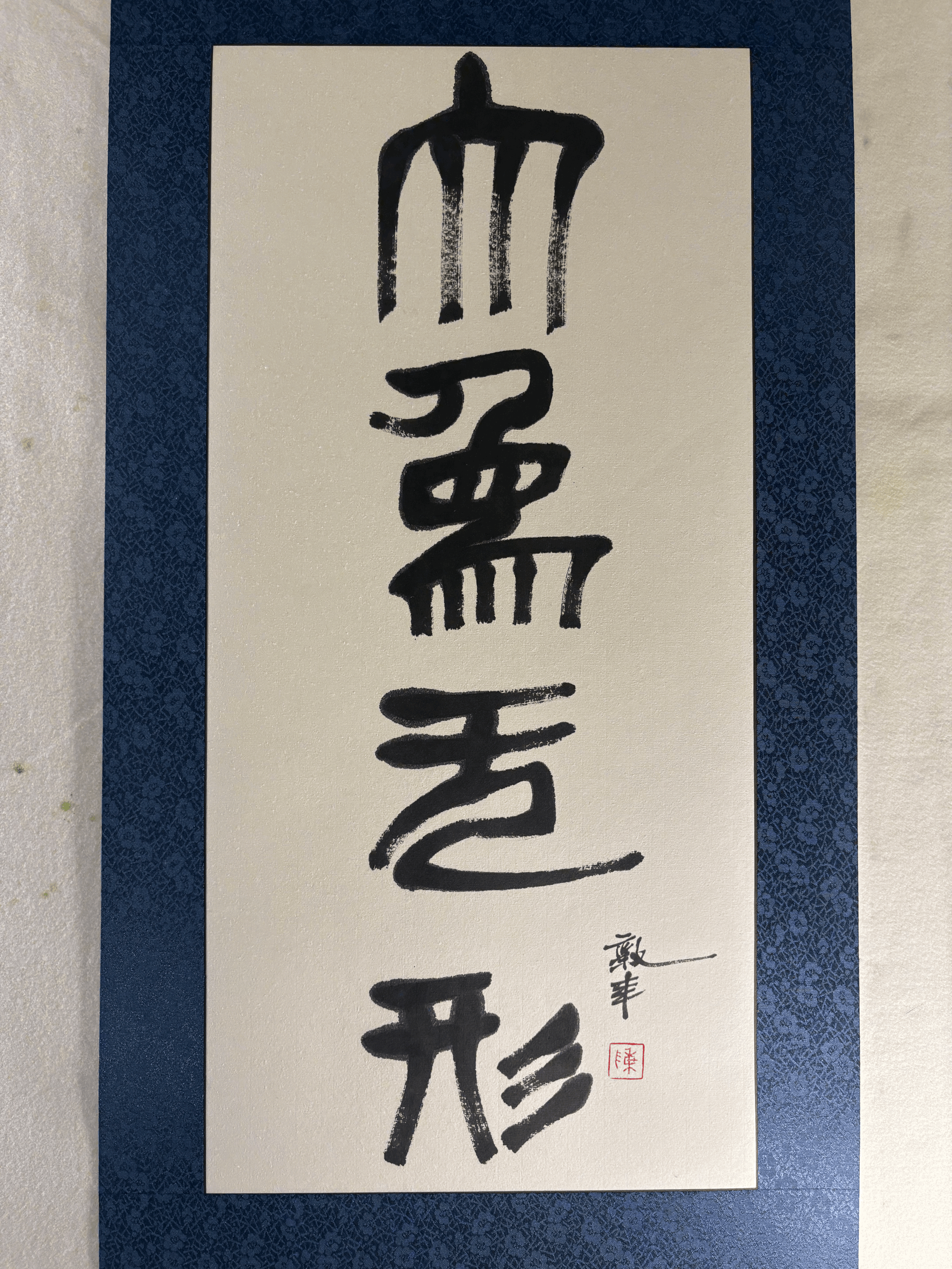 Image 3 of 5
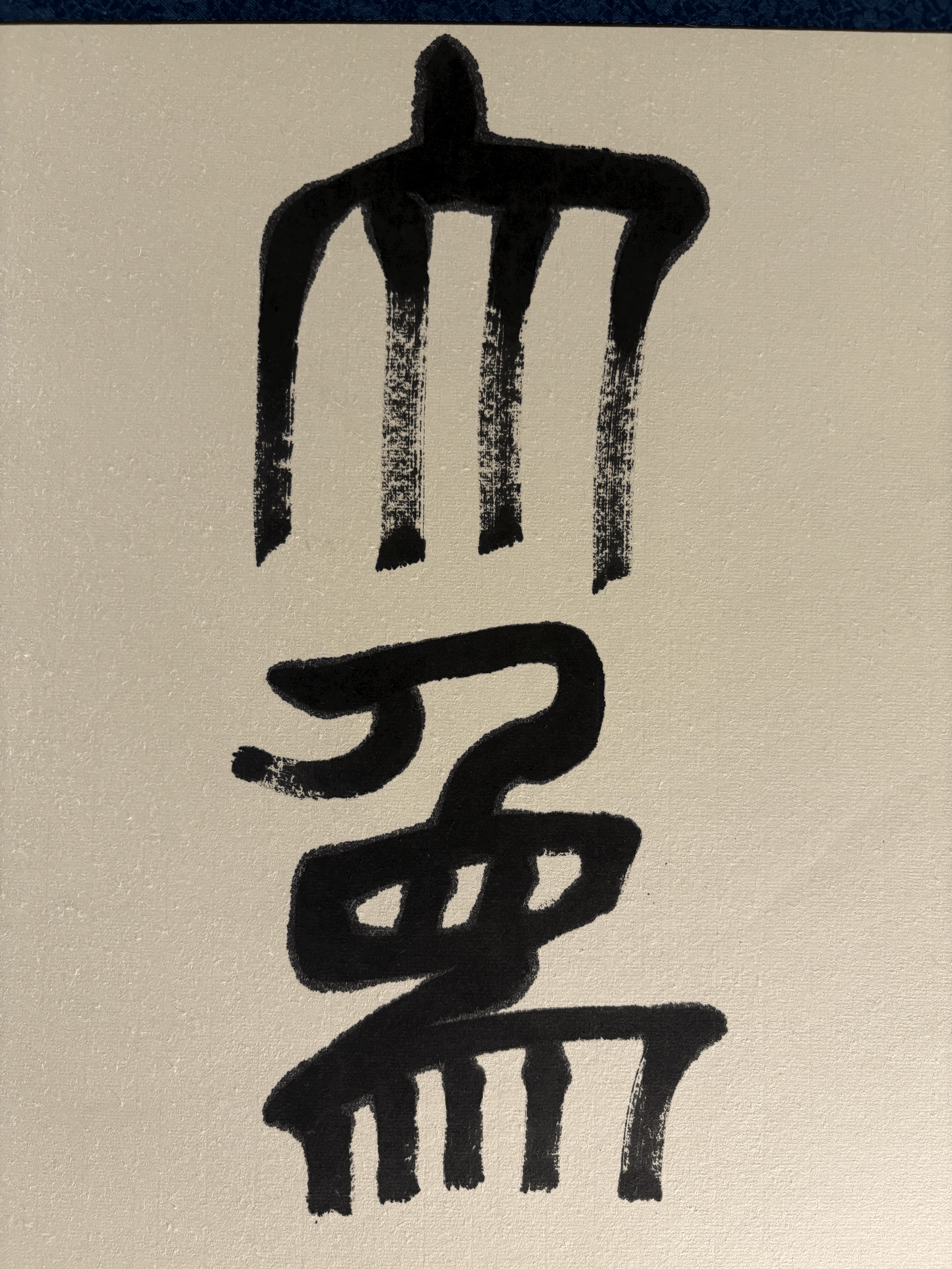 Image 4 of 5
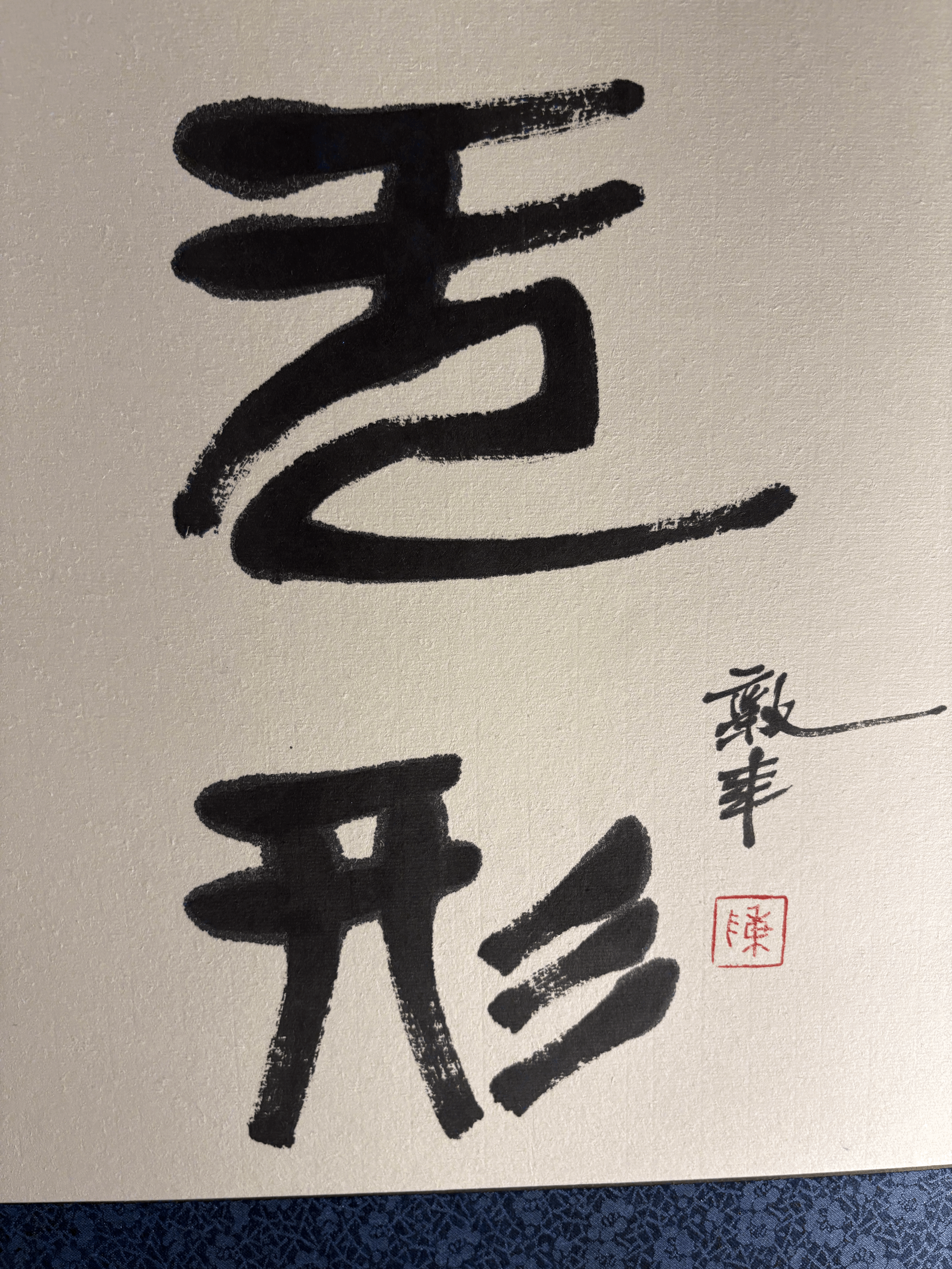 Image 5 of 5
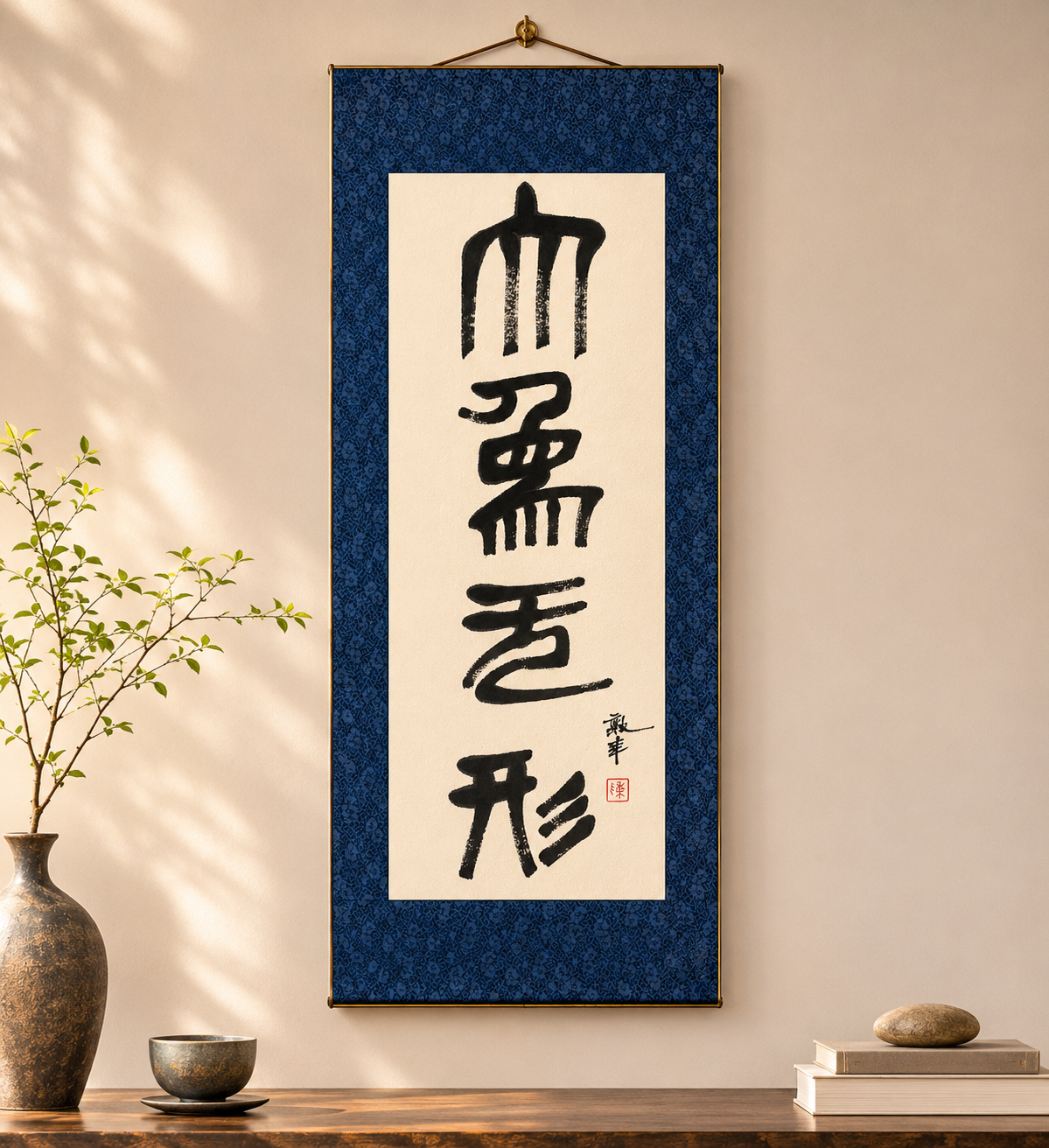
Original Chinese Seal Script Calligraphy by Gengxin Chen
The Great Image Has No Form is a profound expression from the Tao Te Ching, the ancient Chinese philosophical text attributed to Laozi.
It suggests that what is truly great cannot be confined to a single visible form.
The deepest music may be found in the quiet resonance of a few notes. The purest nourishment may be as simple as a glass of water. And perhaps the most peaceful state of mind is one that remains undisturbed by either sunshine or rain.
In Chinese philosophy, true greatness does not depend on outward complexity or display. It arises from an inner freedom that transcends rigid forms and limitations.
Written in an expressive interpretation of ancient Chinese seal script, these four characters explore the relationship between form and freedom, strength and simplicity.
The bold ink strokes, shifting textures, and unrestrained movement reflect the artist’s belief that calligraphy should be written with the heart, rather than constructed according to a fixed design.
Artwork Details
Artist: Gengxin Chen
Text: 大象無形 (The Great Image Has No Form)
Medium: Chinese ink on paper
Style: Contemporary interpretation of Chinese seal script
Type: Original, one-of-a-kind calligraphy
Artwork Size: 33 × 65 cm (approx. 13 × 25.6 inches)
Overall Size: 45 × 88 cm (approx. 17.7 × 34.6 inches)
Presentation: Traditionally mounted with a decorative blue silk damask border
Condition: Mounted and ready for framing; glass or wooden frame not included
Shipping: Carefully rolled and shipped in a protective mailing tube
A Note from the Artist
To me, the greatest beauty is not necessarily found in complexity.
A few notes of ancient music, a cup of pure water, or a mind at peace with both sunshine and rain may reveal something far beyond their outward forms.
In my calligraphy, I seek the same freedom — allowing the brush to move naturally, without being confined by rigid expectations.
True freedom is not the absence of form, but the ability to move beyond its limitations.
When we no longer cling to outward forms and the judgments of others, do we find it easier to attain inner peace?