
Beyond Wind and Rain The Art of Inner Peace
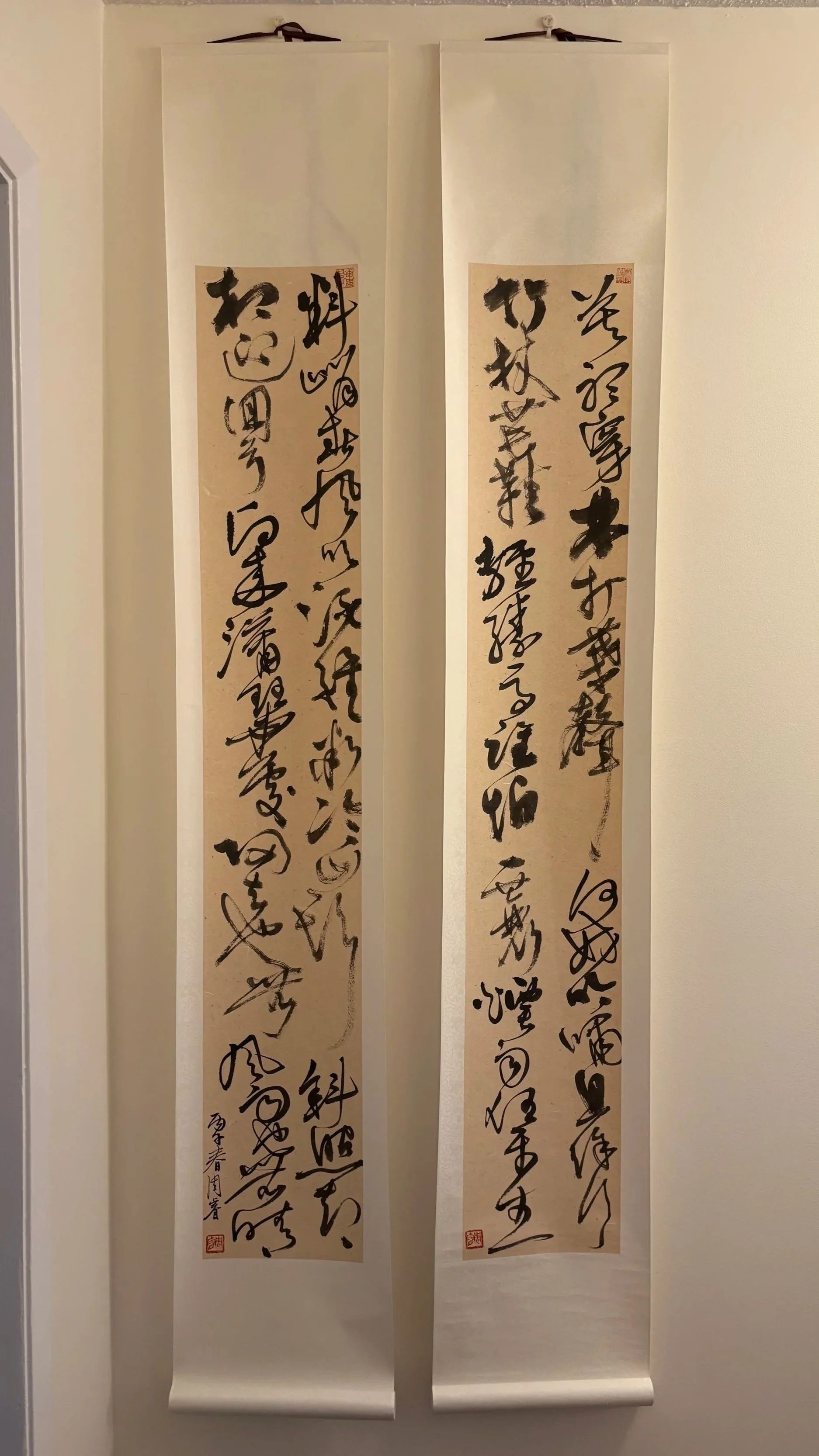
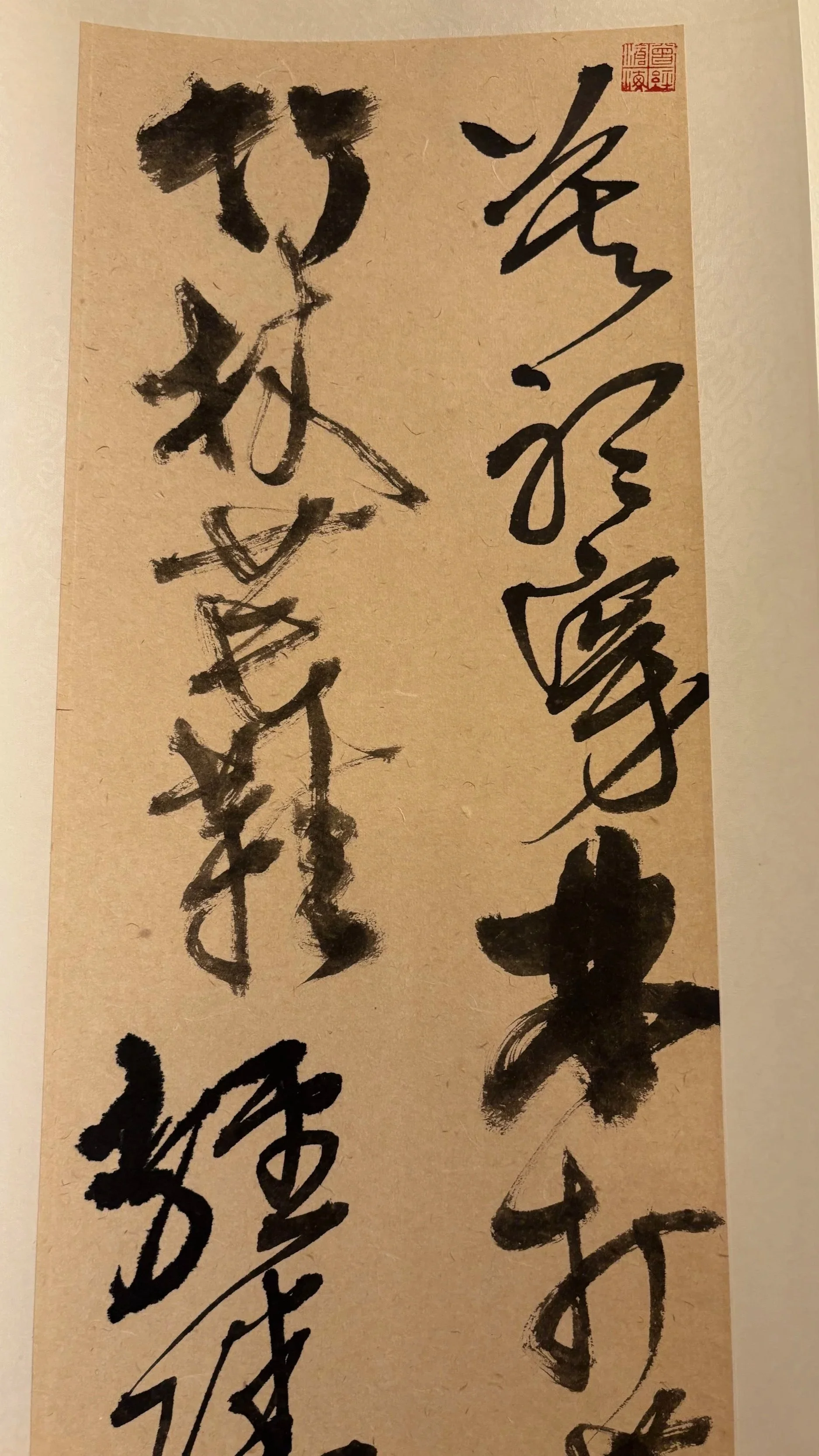
There is a Chinese poem that has stayed with me for many years. It is Ding Feng Bo (定風波), written by Su Shi (1037–1101), the great poet of China’s Song dynasty.
In the poem, Su Shi describes walking through a sudden rainstorm. While others hurry to escape the rain, he continues at his own pace, untroubled by the weather.
The poem ends with these remarkable lines:
Looking back at the place where wind and rain had passed,
I turn toward home—
There is neither wind and rain, nor sunshine.
These words express a philosophy of life that I deeply admire.
Inner peace does not mean a life without storms. It means no longer being ruled by them.
This understanding of life is also at the heart of what I call The Peace of Mind Project.
A Poem Written in Ink
Because of my deep connection with this poem, I asked my calligraphy teacher, Professor Zhou Rui, to write it for me.
Professor Zhou is a scholar of literary and aesthetic theory, as well as a calligrapher who has devoted many years to the practice of brush and ink.
I have always admired not only his mastery of calligraphic technique, but also his ability to express the deeper meaning of a text through the movement of the brush.
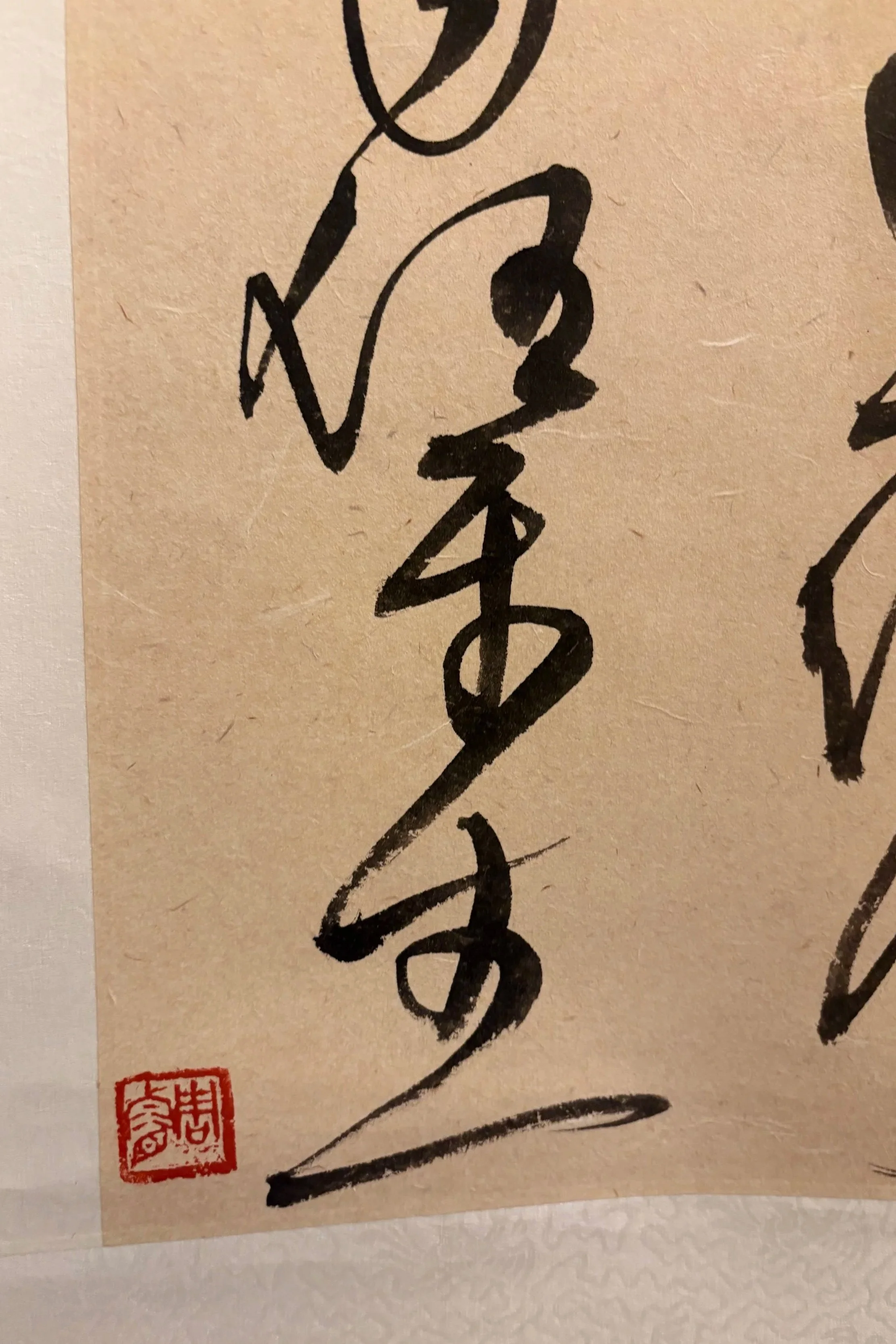
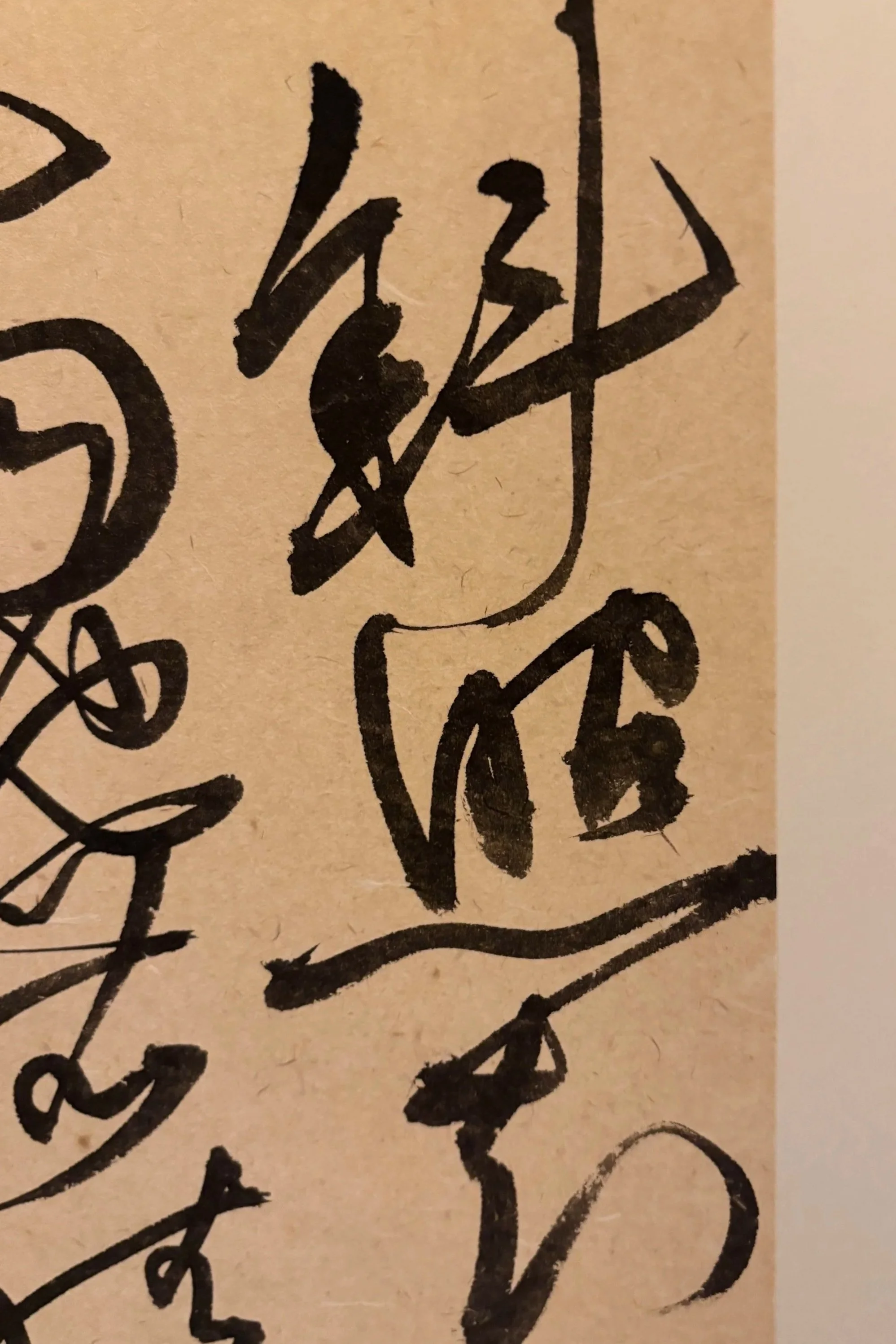
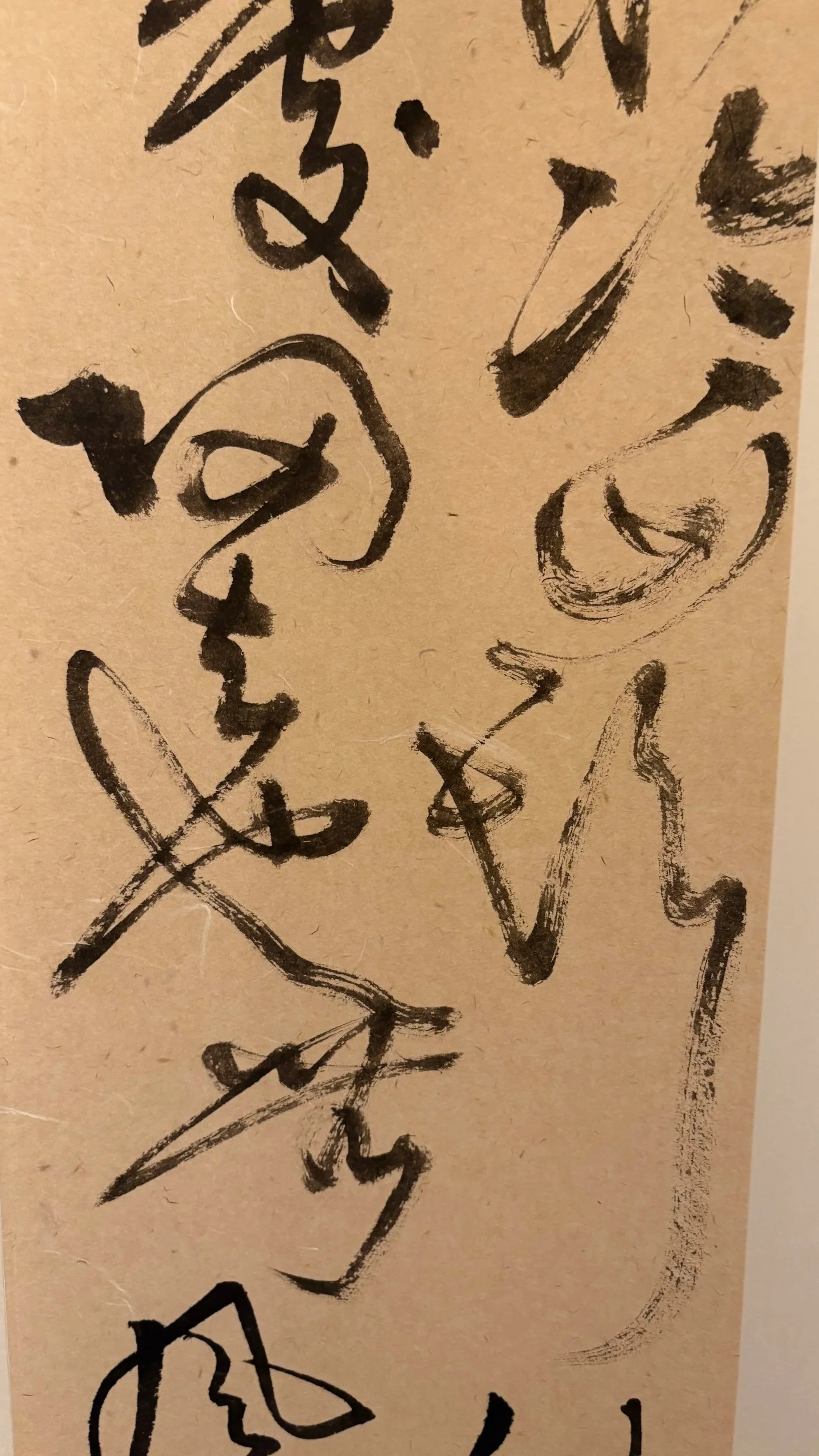
In this work, his strokes move between strength and lightness, concentration and release. Dense black ink gives way to dry, delicate lines. Some characters seem to surge forward, while others flow with effortless ease.
To my eyes, the calligraphy carries something of the poem itself: the movement of wind and rain, and the freedom of a spirit that is not overcome by either.
The writing is full of energy, yet its deeper message is one of inner freedom.
Finding My Own Path
Professor Zhou also played an important role in my own artistic journey.
It was he who first encouraged me to concentrate on seal script, one of the oldest forms of Chinese writing.
Over the years, seal script has become much more than a calligraphic style to me. Its ancient forms, its relationship with nature, and the movement of the brush have gradually become a way of exploring my own inner world.
I have come to believe that a line of ink can carry something beyond the meaning of a written character.
Even someone who cannot read Chinese may still feel its rhythm, strength, movement, and stillness.
For me, this is one of the most fascinating possibilities of Chinese calligraphy.
The Meaning of Peace
When we speak of peace, we often imagine silence, calm water, or a world without disturbance.
But life is rarely like that.
There will always be wind and rain. There will always be unexpected changes, disappointments, and uncertainties.
Perhaps the deeper meaning of peace is not to remove these things from our lives, but to find a way of living without surrendering our inner freedom to them.
I believe art can help us approach this state of mind.
A painting does not have to be gentle to bring peace. A brushstroke does not have to be quiet to express stillness. Even a work filled with movement and powerful contrasts can lead us toward a sense of inner balance.
What matters is not simply how peaceful the artwork appears, but what it awakens within us.
This is the spirit behind The Peace of Mind Project.
I hope to create works that people can live with—works that, through repeated encounters, offer a small moment of freedom from the noise and demands of everyday life.
Not an escape from the world, but another way of being in it.
Whenever I look at Professor Zhou’s calligraphy, I am reminded of Su Shi walking through the rain, unhurried and unafraid.
And I return to those final words:
Neither wind and rain, nor sunshine.
Perhaps true peace begins when we no longer need the world to be a certain way in order to feel at ease.
⸻Featured artwork: Ding Feng Bo (定風波), calligraphy by Professor Zhou Rui, after the poem by Su Shi. Reproduced with the artist’s permission.